Telegraph Cove – Kayaking with Humpbacks, Orcas and Sea Lions who have a real attitude problem (2 to 4 day trip)
Part 1: (overwritten, self-indulgent, irrelevant introduction I encourage you to skip)
I was waiting alone at the doors to The Bay (a recently deceased Canadian big box retail store) to open on a Wednesday morning with no real shopping objective in mind. It was a particularly special Bay-Days sale day as it was their final Bay Days sale day due to the fact that the company had been hemorrhaging money for over a decade and it officially announced its permanent closure. So therefore, this visit was twofold – to pay my respects to an establishment that has been a permanent fixture throughout life thus far, and to participate in the kind of retail therapy that could only be satisfied with the finding of a really good deal. There was an antsy-ness to me at the time that I felt could be solved with a severely discounted anything (this will circle back to something loosely related to this blog). The doors were eventually opened by a slow-moving older employee who spent the rest of the morning following me from a distance as I perused. Just him and I, walking slightly apart, like an old couple with nothing to say to each other anymore, completing their routine daily neighborhood walk together five concrete sidewalk blocks apart.

I ended up perusing my way to the Diesel brand men’s clothing display and spotted a pair of white jeans, and thought to myself that, with the right kind of confidence, they were a thing I could pull off. So I made my way over to bother my neighborhood walking partner and asked if he could open a changeroom stall for me, to which he did, only after telling me “Sir just so you know these aren’t a part of the Bay Days sale”. And there I am, with a pair of tight white jeans on, looking at myself in a changeroom mirror, deciding if I’m prepared to commit to the identity politics of publicly carrying myself as a white jeans guy going forward. And at that moment I knew, whatever was going on with me to get me to a point where I was in a changeroom - staring at myself with tight, white, purposefully ripped jeans - was bigger than the jeans or the Bay Days sale that brought me there. The tight white jeans were like a canary in a coalmine, asphyxiating on soot, of some greater existential dilemma that wouldn’t be solved with pants that made me look even more like the universally praised singer Pitt Bull than I do already. And so, I put back the tight white jeans, open-kissed The Bay employee on the mouth, and ran back home to write this blog, and am hopeful that, sharing my adventures here, a minor creative outlet, is the tight white jeans I’ve been looking for all along.
PART TWO – WHAT TO EXPECT PADDLING THE STRAIT AND SOUND AND HAZARDS ALONG THE WAY.
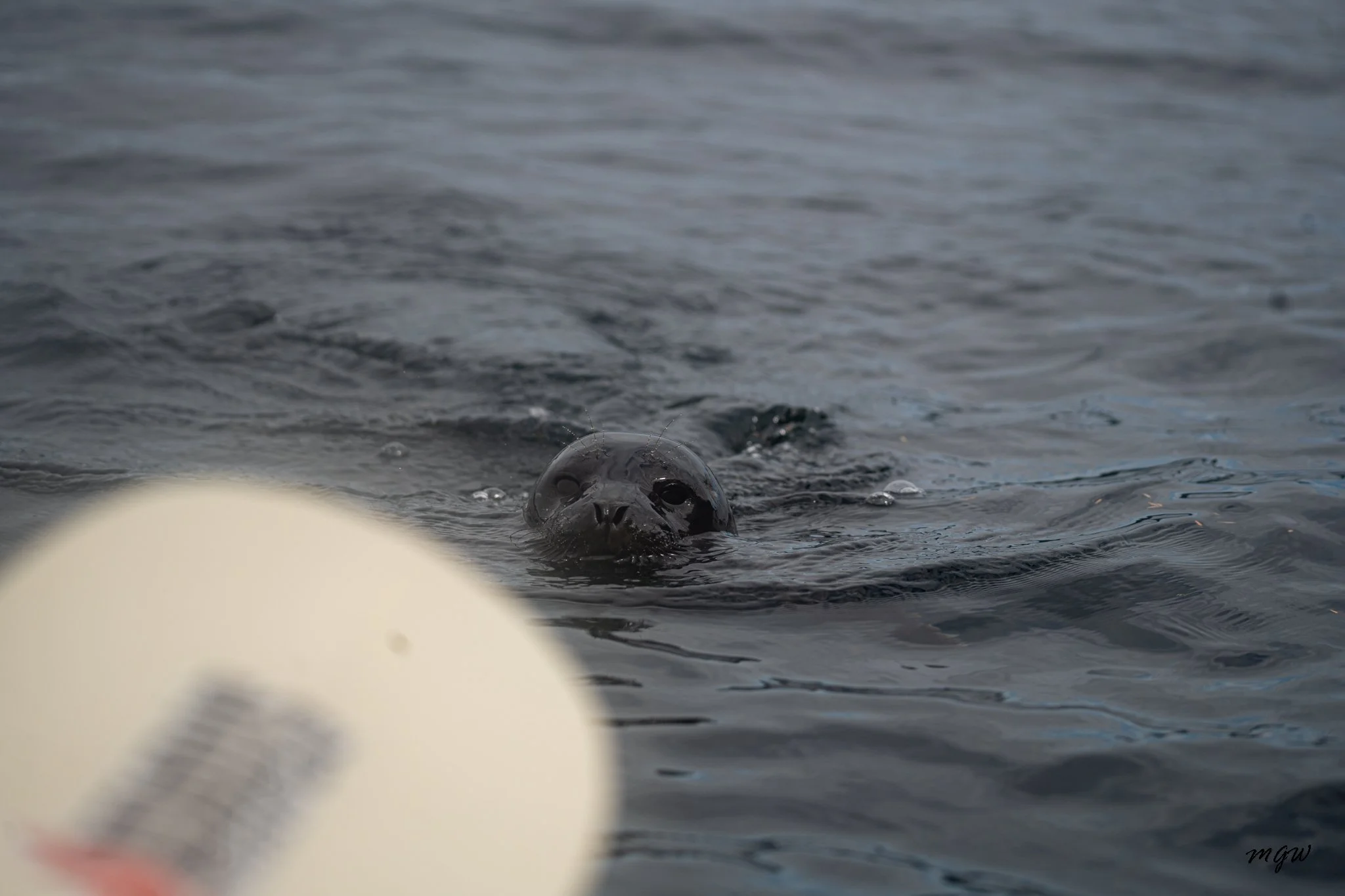
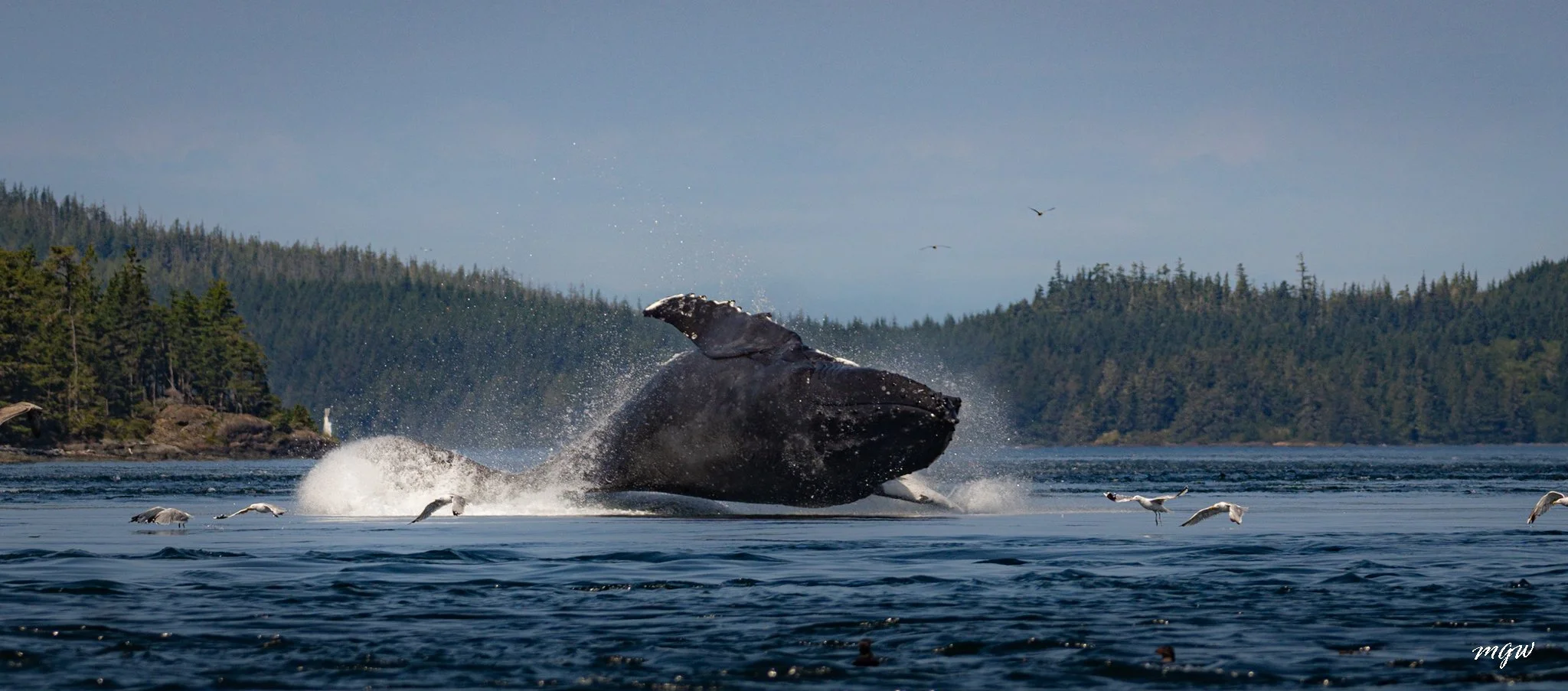
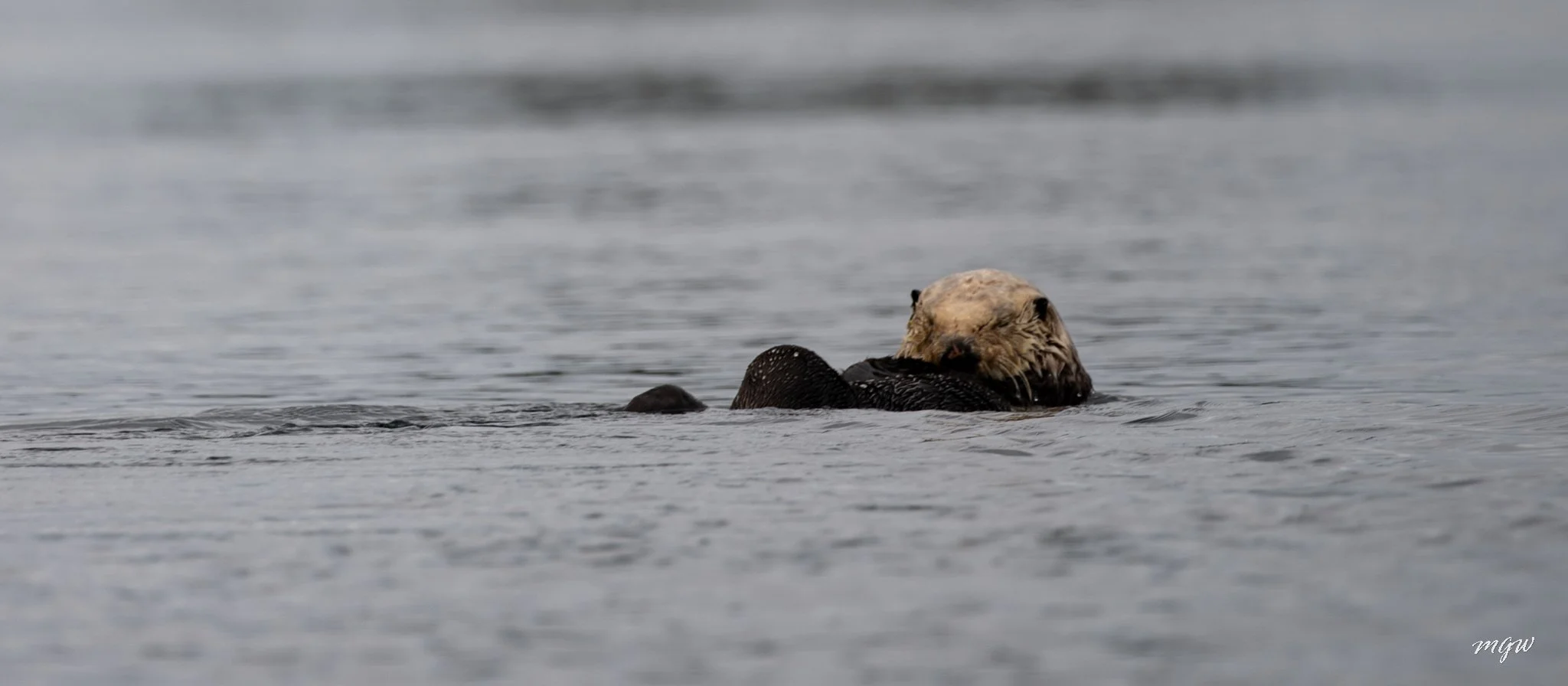
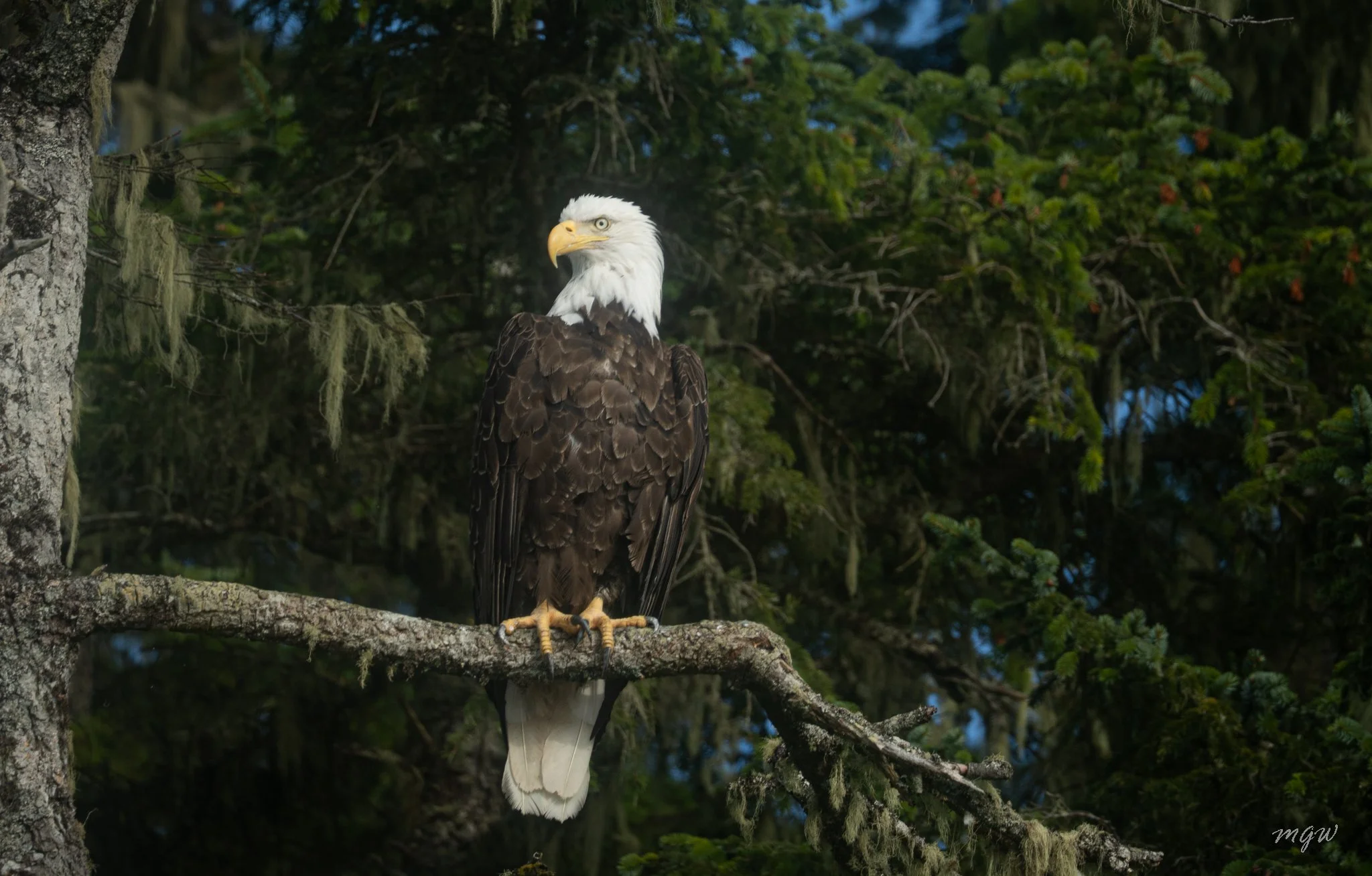
Wildlife - I have done this trip four times now and have had the opportunity to spend every one of our days on the water with Humpback whales, sea lions, sea otters, seals, bald eagles and jumping salmon, with three of these four trips spent paddling with orcas. I state the obvious disclaimer that, these being wild, migrating animals (who I would imagine are past due for a migration public forum to discuss skipping Vancouver entirely and remapping their migratory route to go from Hawaii to Mexico), there are never any guarantees to seeing wildlife. I will say however, that in all my wildlife trip planning in a kayak, canoe, scuba gear or otherwise; this has been my most assured thing in regard to planning a trip around an animal sighting.
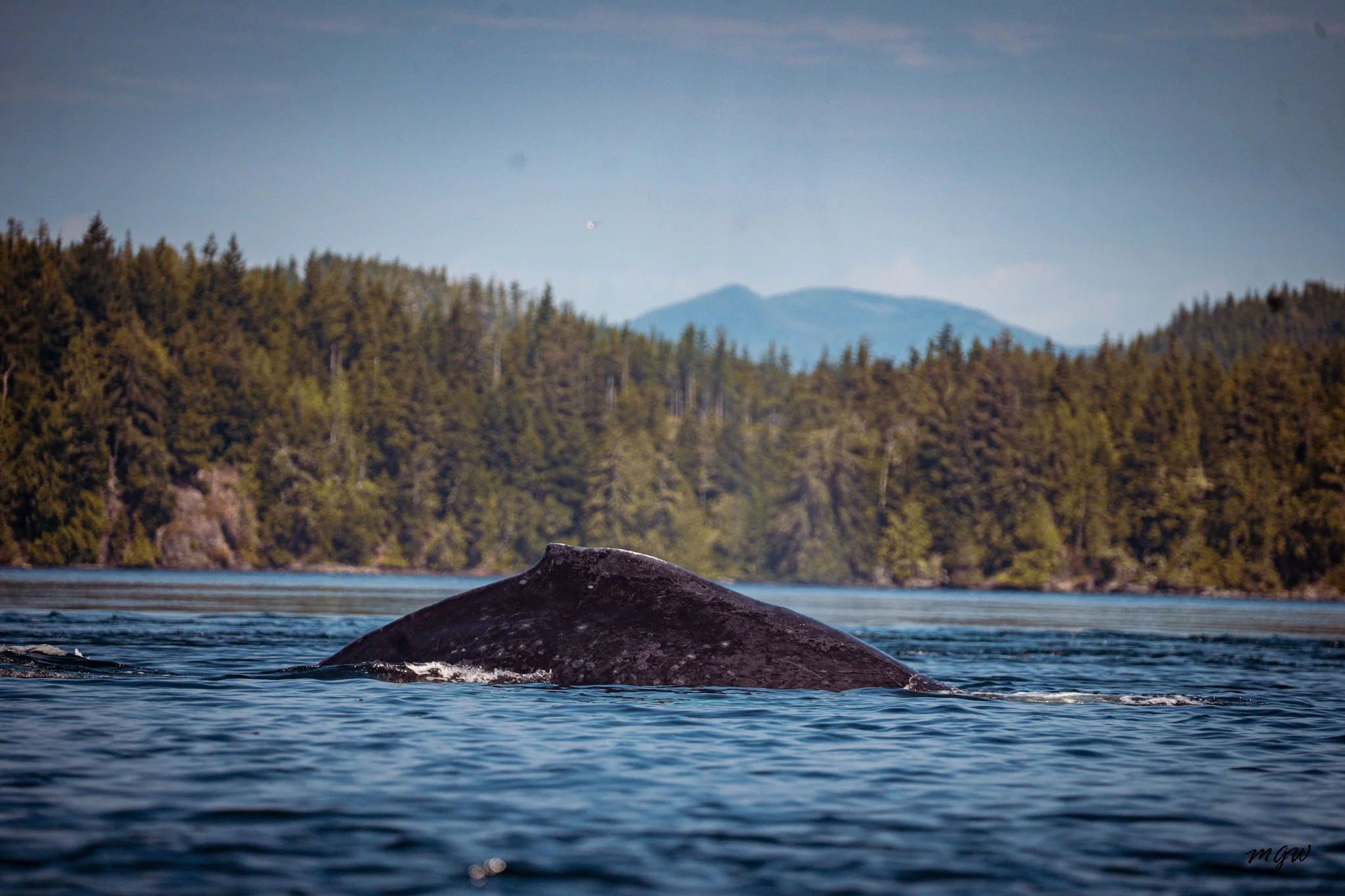
The only sizable danger from wildlife on this trip is the sizable wildlife playfully jumping and landing on your persons’ and kayak. This has never happened to myself, nor have I heard of this happening to anyone on this particular Kayak trip, but it is by no means impossible. The humpbacks use the unique currents in the Blackney Passage to eat and play. This playful behaviour includes whale tails, fin slapping and an occasional back flop (comes off as a little attention seeking)
Currents - This is not a physically demanding trip with the total distance to the Blackney passage from the Telegraph Cove launch being approximately 11-14 kms, (depending on the pathing of your kayaks), however this is considered a trip for experienced ocean kayakers, primarily because the currents in the Blackney Passage are strong, multi-directional and unpredictable. Managing to plan a route avoiding current takes experience. There were times this year when I would take my group into the channel at the stated slack tide, only to look up from my tide chart at aggressive currents creating sizable whirlpools within the passage. A great way to learn important skills for this trip would be by taking Paddle Canada’s - Sea Kayak level 2 course. At the very least do what we did and learn to read a tide chart before committing to this trip.
Slippery Rocks - Your point of entry from your camp site changes dramatically based on the tides. There is a 10–15-feet difference between high and low tide, which means if you put out at high tide you may be coming back to your site with a few metres of rocks to carry your kayaks over to get to your site. These rocks contain plants and algae that can be very slippery so careful treading and make sure your water shoes have grip on them.
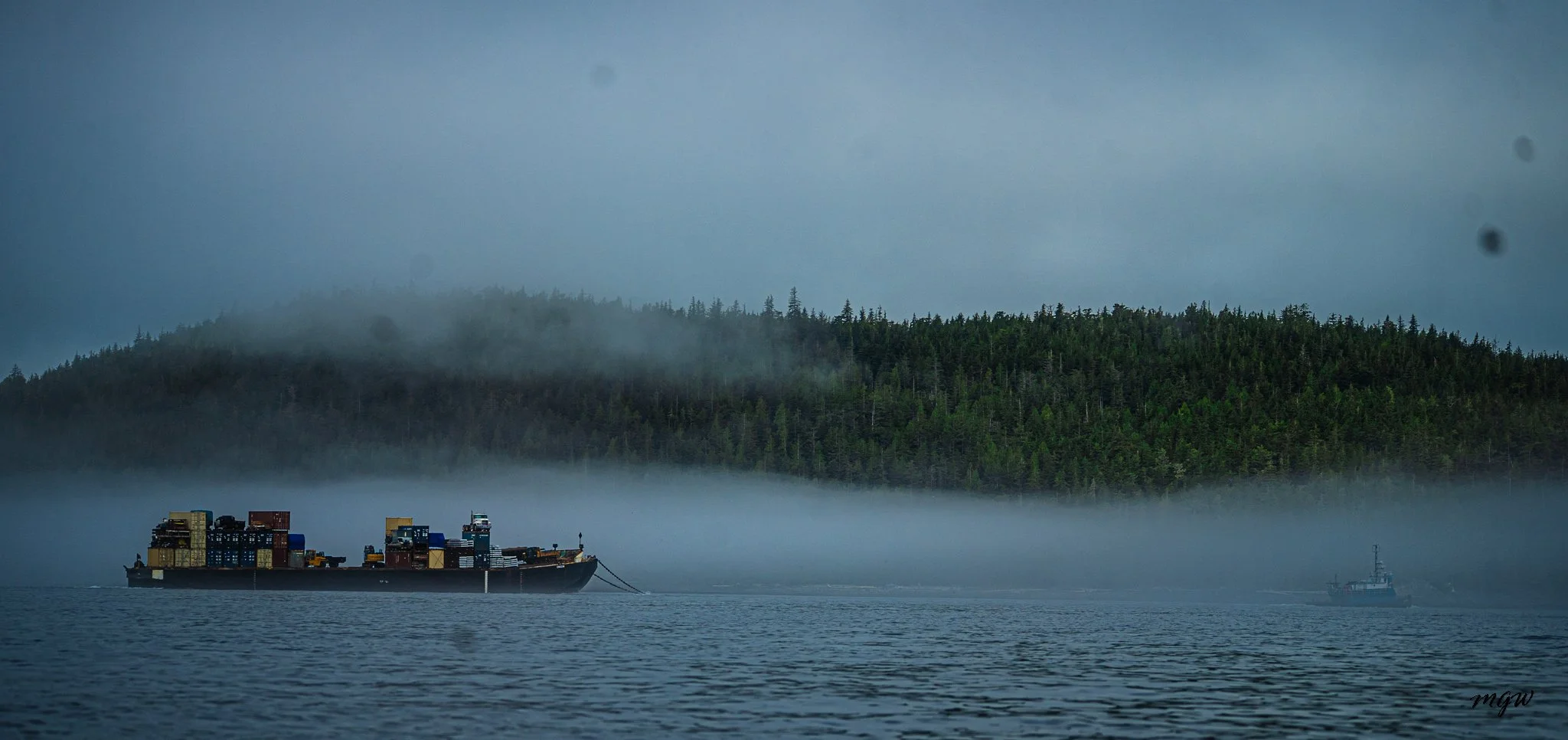
Fog – The fog can become very dense and paddling across the Johnstone Strait and Blackney Passage is particularly dangerous with enveloping fog as there are commercial boats, private vessels and cruise ships who use the strait and Blackney passage for travel. A cruise ship emerging out of the fog ala 2002’s Ghost Ship is a real danger to make note of while paddling through mist.
PART THREE – PRE-TRIP PLANNING
Things to Bring:
Safety:
First aid kit
Garmin Inreach or equivalent
Phone (some of the sites on this trip have a few bars of data – and passing cruise ships provide you temporarily five full bars)
Headlamp
Sunglasses
Hat
Buff (used to protect neck and ears form sun)
A water resistant map
Clothes + Hygeine:
two quick dry t-shirts, long sleeve shirt, sun shirt, fleece sweater, puffer jacket, rain jacket, quick dry pants, sweatpants, long johns, hat, gloves, two pairs of merino wool socks, bathing suit, quick dry towel.
Footwear: river shoes, sandals, hut booties.
Toiletries – standard stuff + poop shovel, hand sanitizer and biodegradable soap
Gear:
Standard tent stuff – tent, sleeping pad, sleeping bag (I use a 0-degree sleeping bag), camp pillow
Camp stove (expect a fire ban during your trip)
Pot and / or pan needed to cook on a camp stove
Cutlery, plate, bowl, mug, cleaning cloths
Food:
Food is up to you. My standard is as follows but it doesn’t have to be yours:
Breakfast: oatmeal + fruit & Nut Bar + coffee
Lunch (eaten while kayaking): beef jerky, dried fruits, dried vegetables, nuts and seeds, protein bar
Dinner: Naan Pizzas, Salmon, vegetables and rice, Rehydrated meals
Water: With weight not being an issue on this portage-less trip, I bring 3-4 litres of water a day with me, but there is a stream at Kaikash creek if you would like to bring a portable water filter.
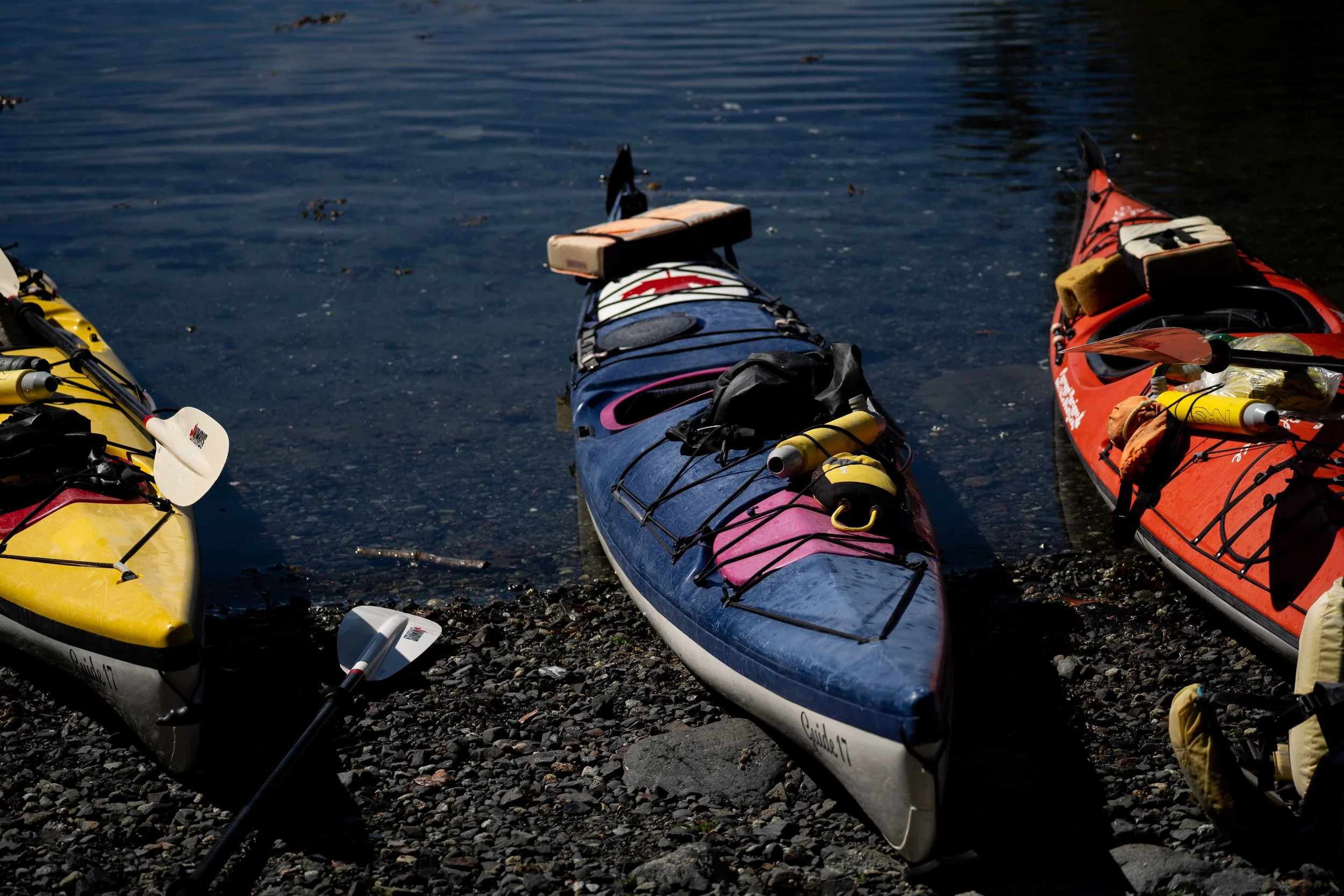
Kayaks: If renting I would Recommend At the Water’s Edge Adventures. They have a quiet and boat launch and relatively affordable kayaks (around $85 CAD a day). I would recommend you take a slight detour north when you leave their bay to see a rock that normally has seals hanging out on it, that I’ve coined “seal rock” before beginning your journey south.
Time of year to plan this trip: We’ve only completed this trip late July to Early August and have always paddled with Humpbacks. I can only recommend what I know so my advice would be to plan in this time frame.
The Night Before: I have stayed at both Airbnb’s listed below previously. Our most recent stay was at Captain Karl’s as we have six of us staying together. It is a gorgeous cottage with picturesque views. If you are arriving with enough time to enjoy your accommodation, I would recommend Captain Karl’s Retreat as the place to lay your head. For smaller groups / pairs, the countryside relaxing rooms were more than needed for our stay, and very affordable and very close to Telegraph Cove.
Captain Karl’s Retreat (Port Hardy): https://www.airbnb.ca/rooms/962351296018209365?guests=1&c=.pi129.pkpast_trip_share_virality&s=67&unique_share_id=8a6fb037-4c7e-42b0-9fb4-ad8986eeffc9
Countryside Relaxing Room (Port McNeill): https://www.airbnb.ca/rooms/49651191?source_impression_id=p3_1760842386_P3AtoVsxPFMftXeV
PART THREE – DAY 1: PADDLE TO KAIKASH CREEK / PARSON ISLAND / HANSON ISLAND OR LITTLE HANSON
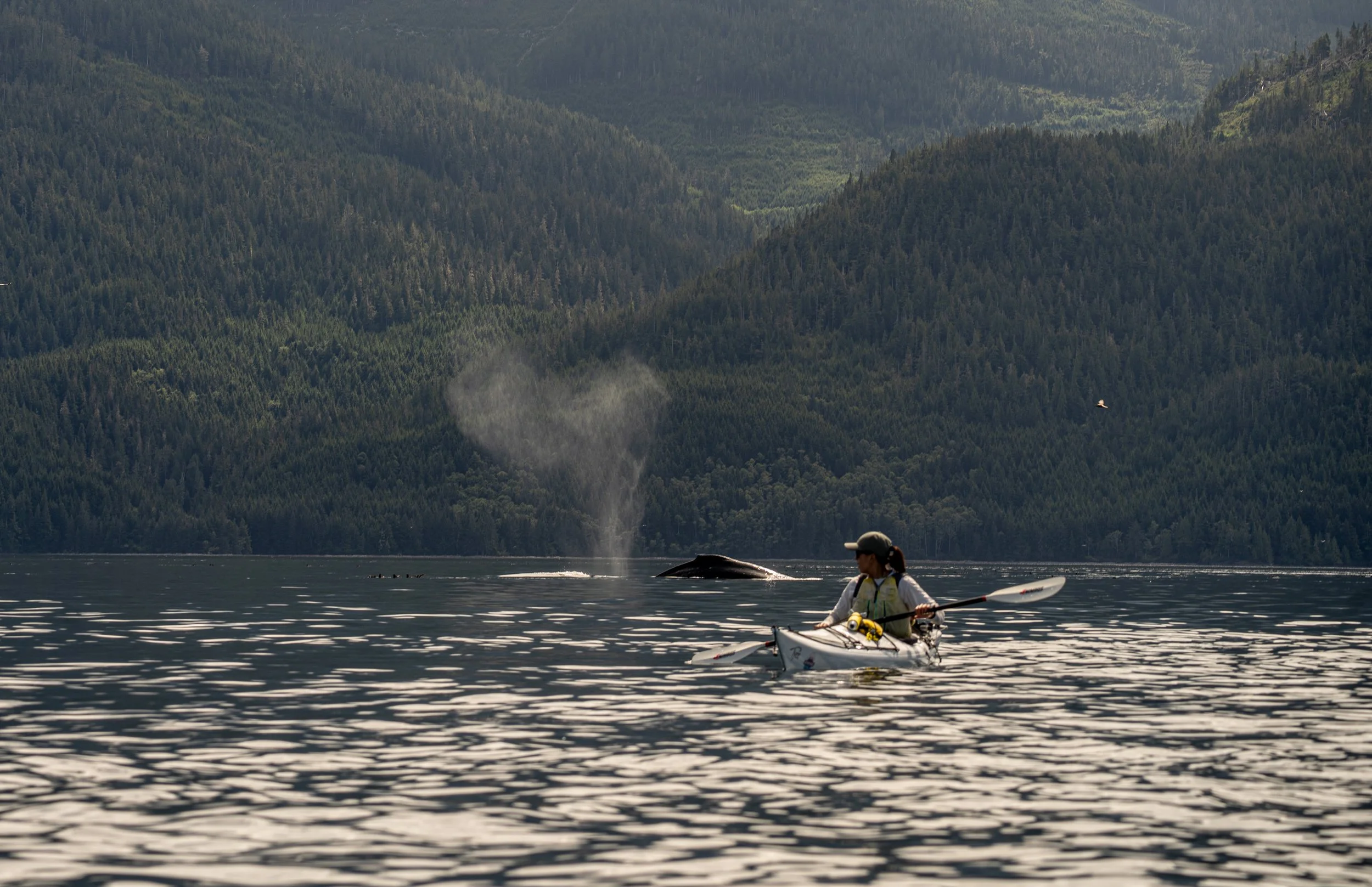
My first time leading a trip out of Telegraph Cove, we followed a much better blog than the one you’re currently reading called Happiest Outdoors and stayed Kaikash Creek as per her experience. The benefits of staying on this site are that it makes for a very easy first day - having to simply follow the shoreline south to this spot, it avoids current and channel crossing, and Kaikash has freshwater access. If you are a beginner group, restless from thinking about whale tales all night, or just don’t feel like doing much on your first day (and that’s fine), I would recommend staying here your first night. This will be approximately a 2-3 hour paddle.
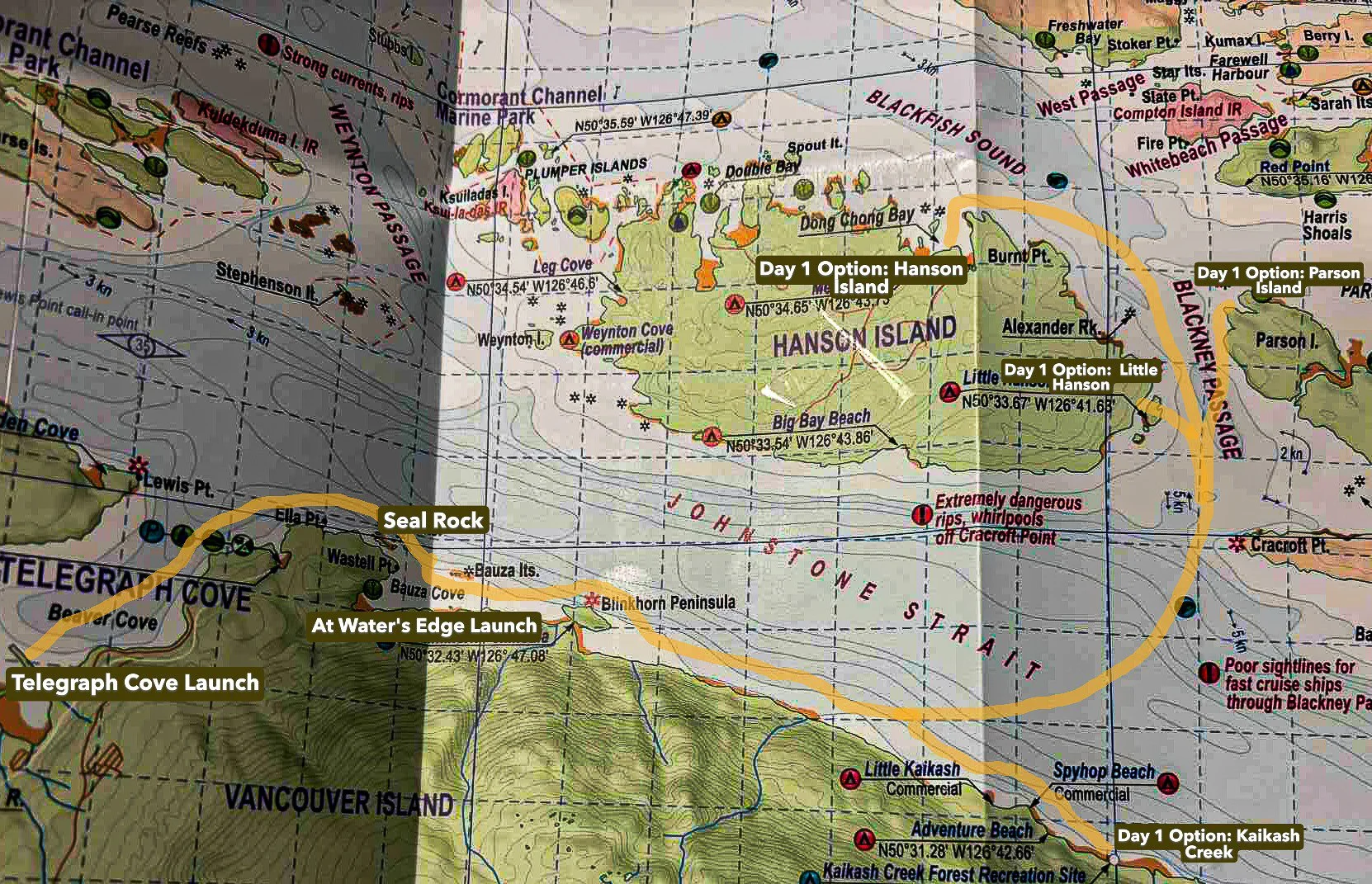
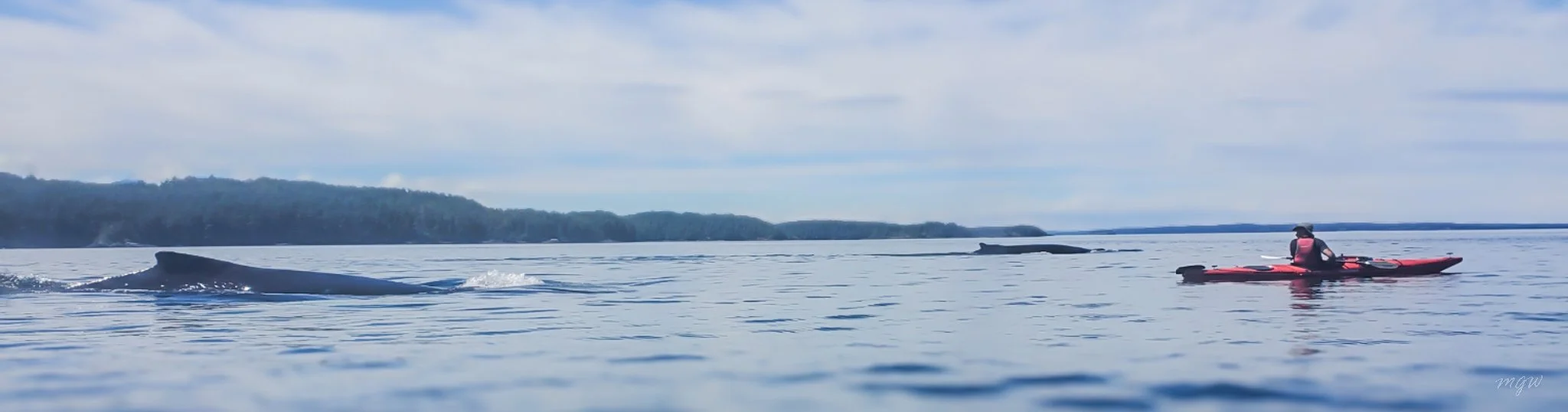
However, I found the humpbacks tend to spend more time in the Blackney Passage and Blackfish Sound, so on my following trips I have stayed on either Hanson Island or Parson Island to have opportunity to paddle with the humpbacks on our first day. Of the two locations, I would recommend Parson Island as it avoids some of the rougher currents that occupy the space where Hanson Island and The Johnstone Strait meet. My most recent trip led me to stay on Parson Island and it is now my favorite location to stay and where I will likely stay when I find my way back here. There were eight of us on this trip and this site had layered intentionally flattened spaces that are designed for tents, with more than enough flat space for our six tents to occupy. I also found, in two of my trips here, the whales consistently swam a route that passed this location multiple times throughout the day. We spent our days with immediate paddle access to whales and nights at this spot listening to whales play in the bay to the immediate right of this location. These locations will be a 3-4 hour paddle. Little Hanson is also a very picturesque location, situated in the channel between Hanson and Little Hanson. This channel makes for some of the prettiest paddling you will experience on the trip. Regardless of where you stay, make sure you spend sometime in this channel enjoying the sights and calm water.
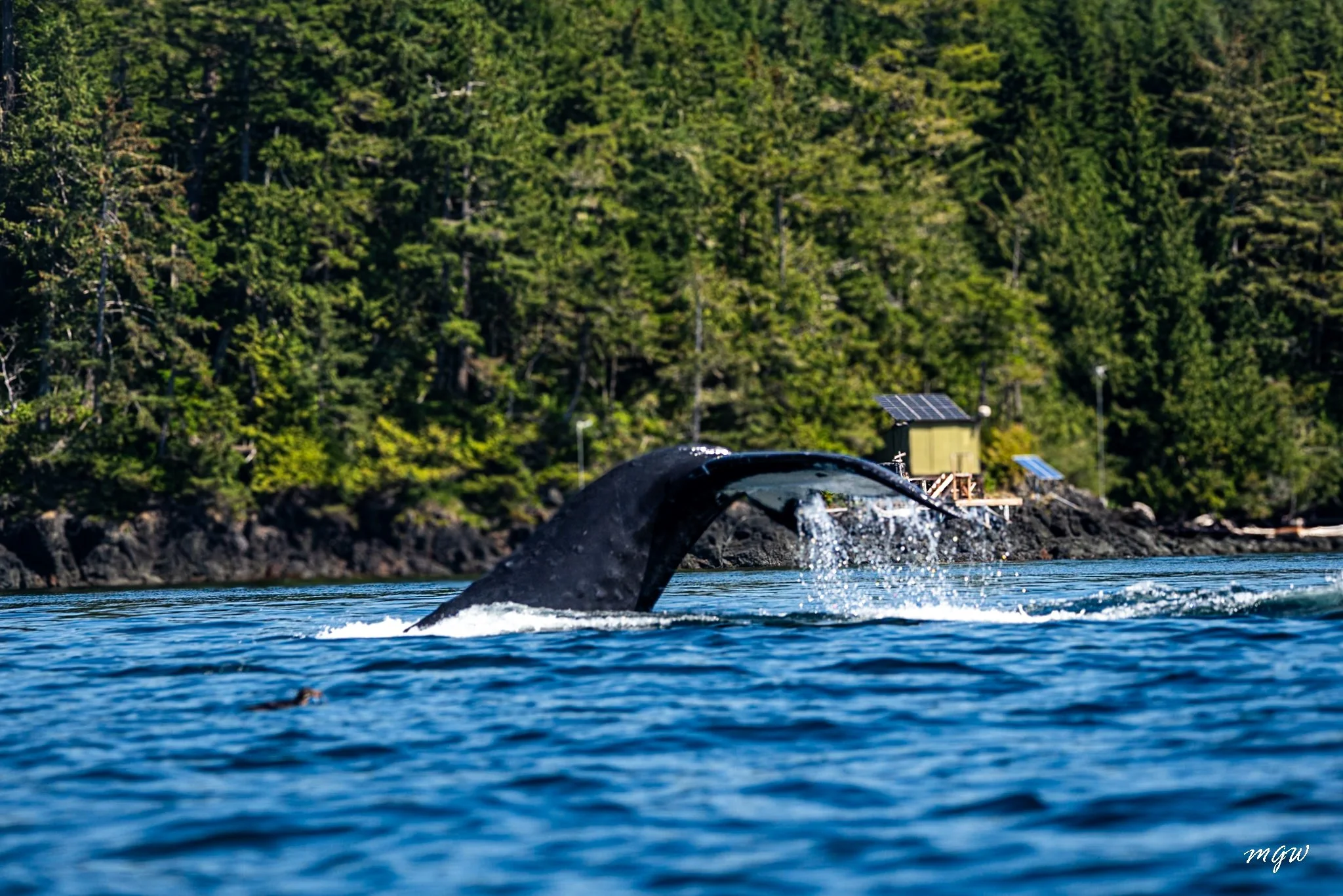
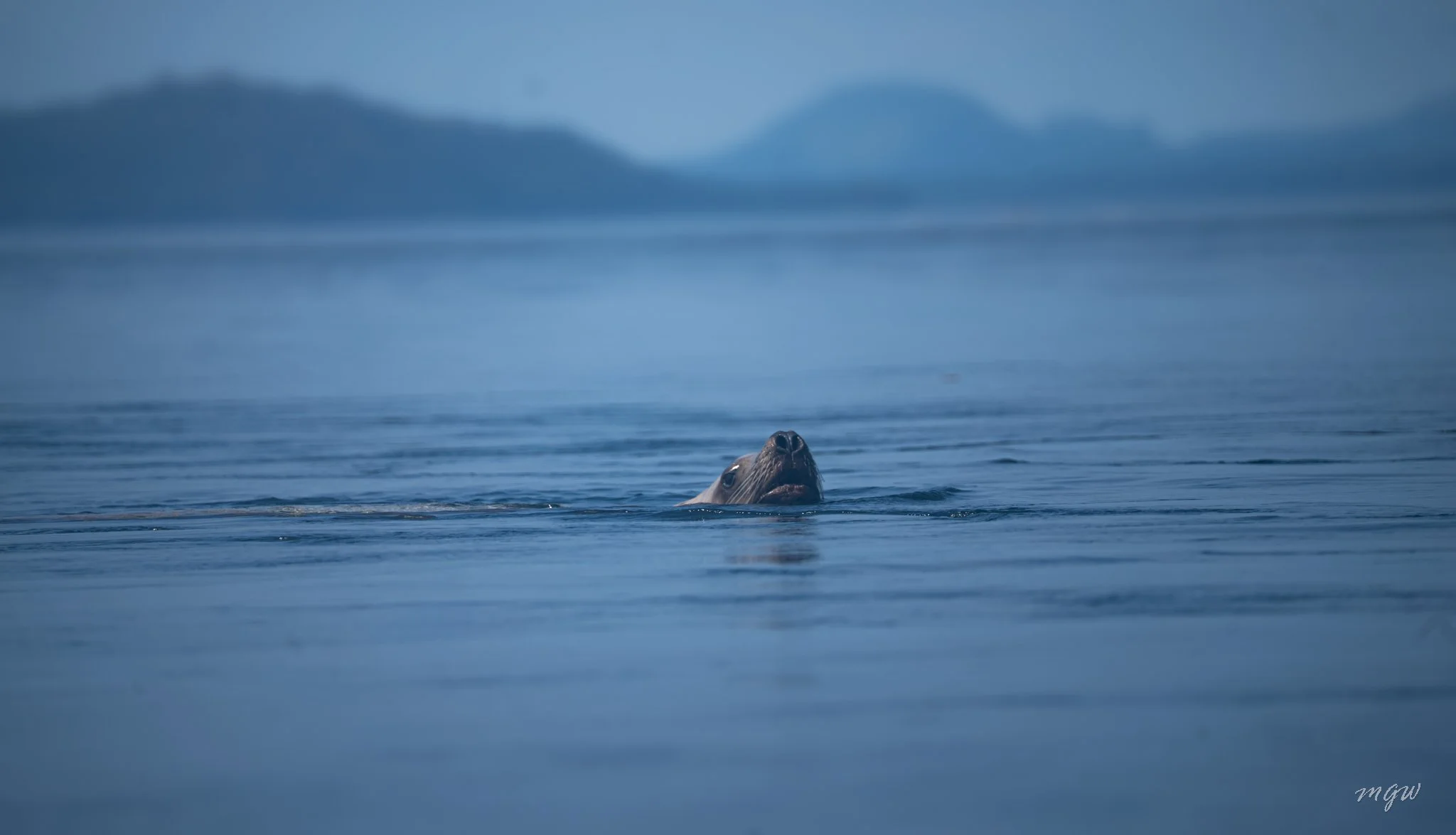
Either way, Hanson or Parson, you are looking at a four-ish hour leisurely paddle before you will be where you need to land to set up camp. If you follow the coastline to toward Kaikash from Telegraph Cove, you will pass a rock (located between Telegraph Cove and At Water’s Edge’s launch points), that has consistently had basking seals. For myself, being primarily an Ontario canoe tripper, kayaking by seals was a genuinely revelatory first time sea paddle experience that’s since been spoiled by all the wildlife encounters that await on this trip. It’s a great first pit stop that serves as a sea animal lubricant of sorts for all that awaits. On the two-three hour paddle to Kaikash, you are likely to paddle past schooling porpoises and will be greeted by a grumpy sea lion or two near the shore of Kaikash creek (we found all the sea lions will snort and perform a feigned charged toward you as you paddle within their vicinity).
In an entirely new phenomenon in my minimal ocean kayaking experience, you will be kayaking through countless salmon jumping out of the ocean. If you decide to paddle to Parson Island or Hanson Island, be mindful of the currents through the Blackney Passage, note the warning on the map above “extremely dangerous rips and whirlpools off Cracroft Point” watch the currents that develop at both Hanson and Parson and plan to enter into the passage during or around slack tide.
TIDE WARNING ANALOGY SIDE BAR: Can’t stress enough the importance of bringing a tide chart with you (and an understanding on how to read it) and beginning your paddle through this marine mammal mecca, particularly through channels created by the islands, at around slack tide. The cross currents during the rising or lowering tides can be fast and cross-directional. Meaning that kayaking through them can turn your kayak suddenly and unexpectedly in directions you do not expect them to go, making for a very unstable paddle through the rising/lowering tides. The tides can also get to the point of speed to where you won’t be able to make up for any distance paddling against them. If you find yourself paddling to Hanson during a fast-moving tidal change, parry-paddle your way to the shore of Hanson Island and keep to the shoreline for the rest of your paddle.
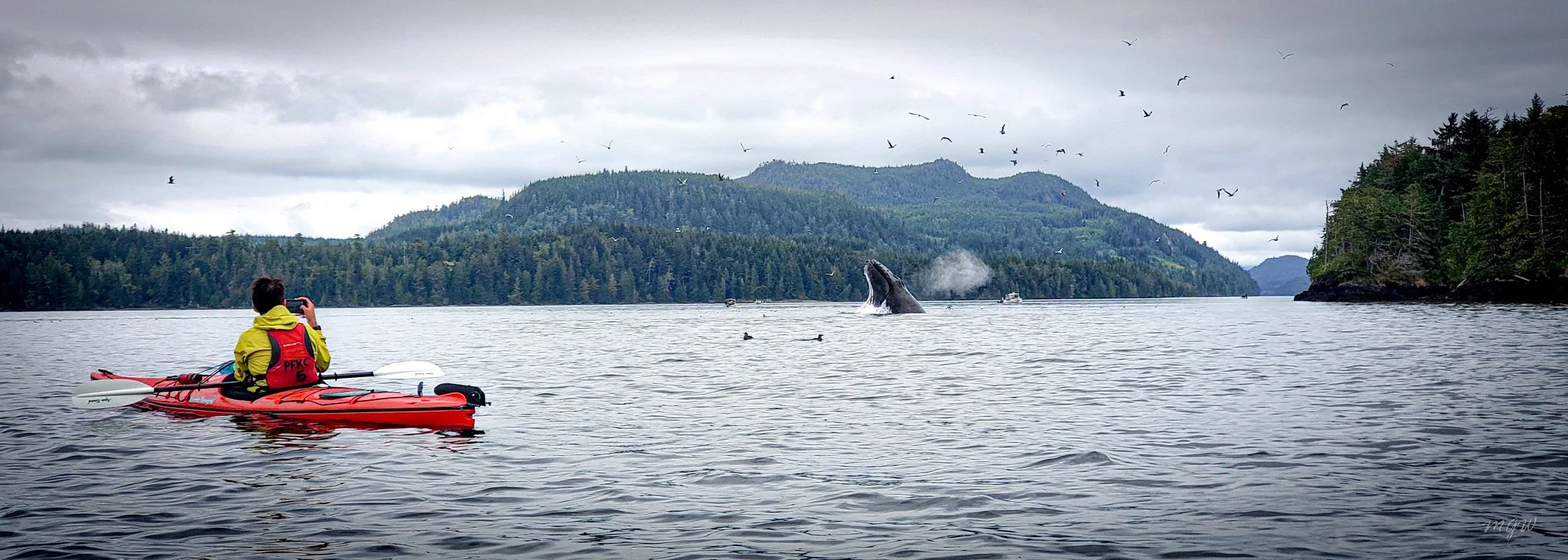
My first time paddling through the blackney passage I had yet to see a whale prior to crossing and had already made peace with the potential of the porpoises and seals we saw during our paddle following the shoreline south being the only sea mammals we would see on our trip. Already it had been a surreal animal viewing experience when placed in comparison to my paddling within Ontario provincial parks and crownland. As we turned to paddle through Blackney, we were met with fog blocking our vision of the entirety of the passage. We were also a little ignorant to how rough the currents could get in this passage at this time and were lucky that, as we decided to casually paddle through the passage, we were met with relatively calm waters. As we paddled, we heard the noise I would here phantom resonances of for years to come, in places no whale would ever breach (Lake Ontario, Georgian bay, Olympic sized pools, banks etc.). The fog made for low visibility, and we could only hear the whales. I’ve spent my life perpetually trying, and more often than not failing, to not have egg all over my face in the declarative things I say out loud, so I held my tongue and continued to listen before making a declaration of whales and eventually, through the fog, I saw that burst of mist shooting out of water that accompany the noise we were hearing. I’m not a very spiritual person, but I seldom have moments of what would be likened to a spiritual experience, and this is on my personal Mount Rushmore of said experiences. My friend and I, with unadulterated joy, forgoed our earlier dispute about pace, and paddled as fast as we could to the area in the channel between Hanson and Parson Island where the whales were breaching. We planted ourselves within their general location, occasionally positioning ourselves strategically to areas where they were likely to breach near.
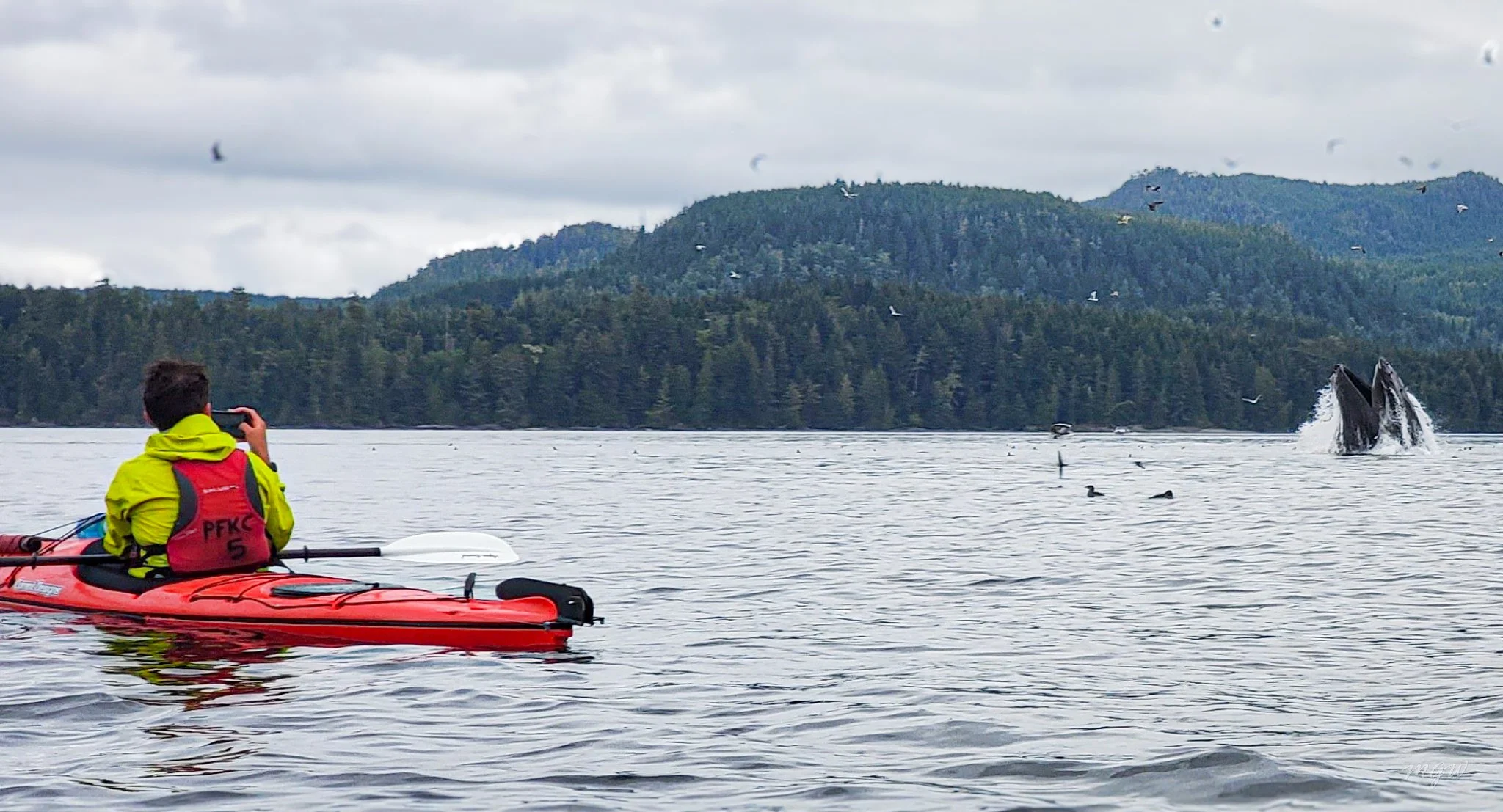
As I paddled to a location we believed would be great viewing of the humpbacks breaching, I did find an adrenaline and fear rising in my body, which came as a genuine surprise. I had already won the internal conflict of worse case scenarios runing through my brain, with the conclusion being that the worst case would be a humpback tipping me into uncomfortably cold water and then rescued by my friend, or, in an absolute worst case scenario, a whale swallows me, spits me out and I spend half a year touring American talk shows to relive my Jonah moment. I’m sure if you have spoken about your plans to paddle with whales out loud, you have already been sent a viral video of a kayaker being swallowed and spat out by a humpback.
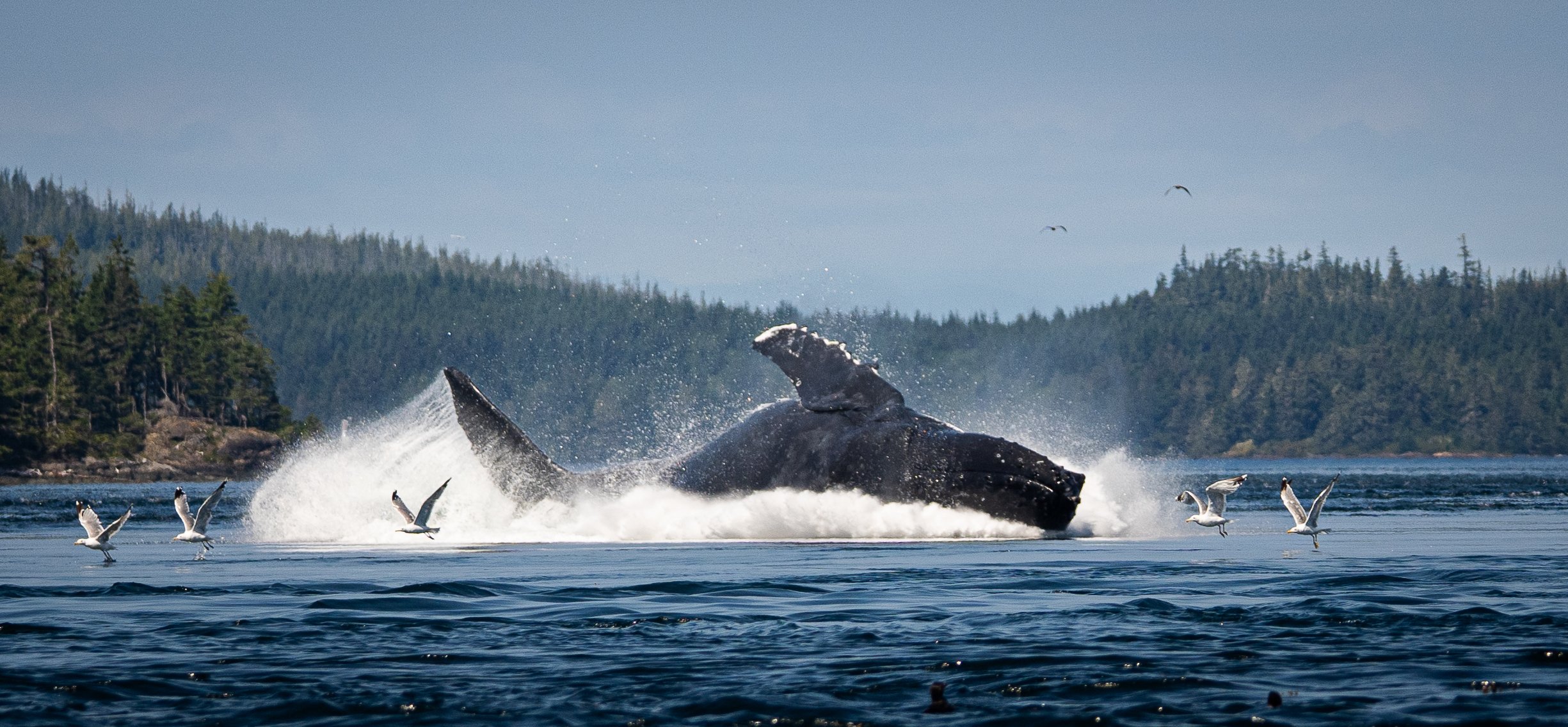
Anyway, as with all revelatory experiences, after the reveal, there is a sort of desensitization to the experience that occurs after embarking on said revelatory experience multiple times. And I mourn the inability to feel as awestruck as I did my first time on this trip. Thankfully, I can continue to take people out for their first time and live vicariously through their wonderstruck. If you are looking for a guide or help planning your first Telegraph Cove experience, feel free to contact me through my email (belowseatosummit@gmail.com) in the About section of this site and I could help you make sure you t’s are crossed and i’s are dotted in your planning of this once and a lifetime experience.
Day 2 + 3 – Whale Watching, Sea Lion Rock and/or Flower Island, camp relocation
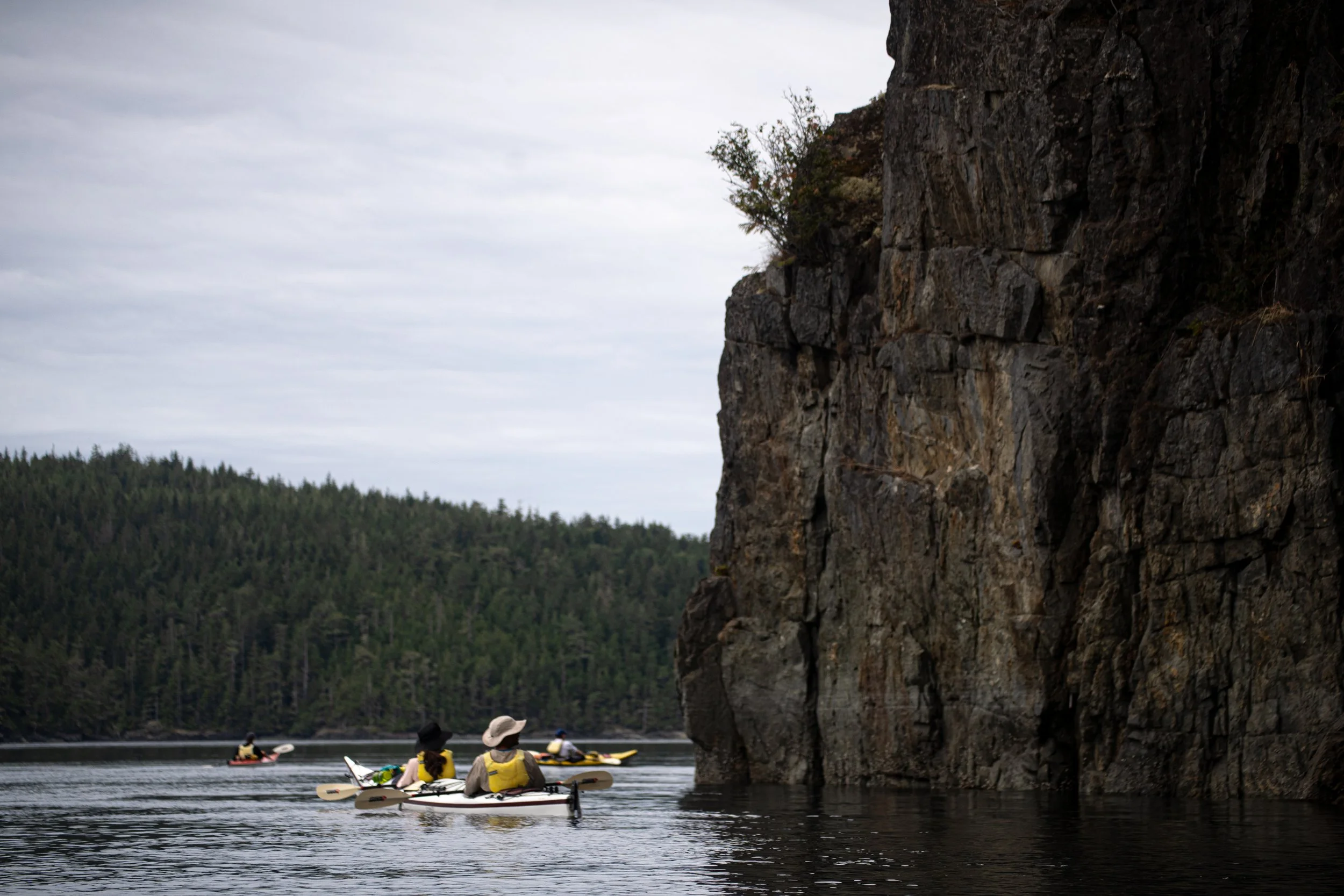
If you plan to stay in the Blackfish Sound and Blackney Passage area, I find it best to dedicate your second day to group whale immersion therapy. I imagine if you’re reading this blog it’s because the main attraction of this trip for you is the whales. I’ve yet to meet a person who has inquired about this trip for the sea urchin viewing experience. If you are coming to this website to plan trip that emphaszies sea urchin sightings, I apologize, as you will be dissapointed with this blog going forward. While you will likely see sea urchins along the way, this blog does not prioritize highlighting ideal sea urchin viewing locations in Blackney Passage and Blackfish Sound. If you do not plan to relocate, I would recommend paddling to sea lion rock, which is only visible during low tide. There are typically multiple sea lions on this rock that will swim toward you to check you out as you paddle past it.
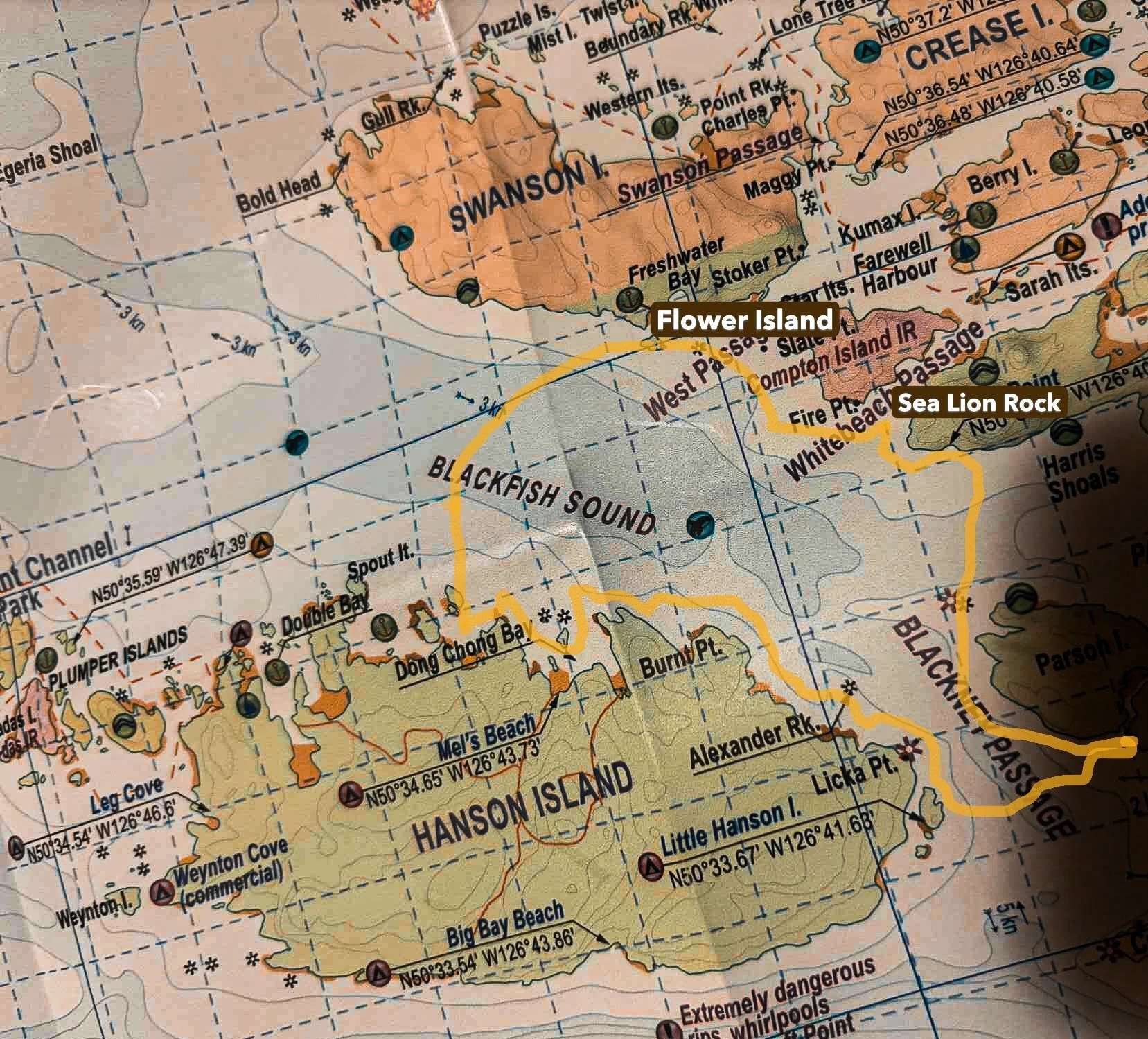
Above is a potential route you can commit to either Day 2 or 3, with the potential of packing up camp in the morning and moving to another site. If you choose to move sites, I would recommend Flower Island if avaliable (it’s a very popular guide site) or Dong Chong Bay (I try to say the name of this site outloud as little as possible). While I have not stayed on Flower Island, we have stopped there to relieve ourselves and, during said relieving, an adolescent Humpback was playfully swimming circles in crystal clear water directly in front of us. The beautiful beachfront of this location aside, I’ve heard it’s common for young humpbacks to circle the island to rub their bellies on the sand, leaving the potential for a unique whale viewing experience.
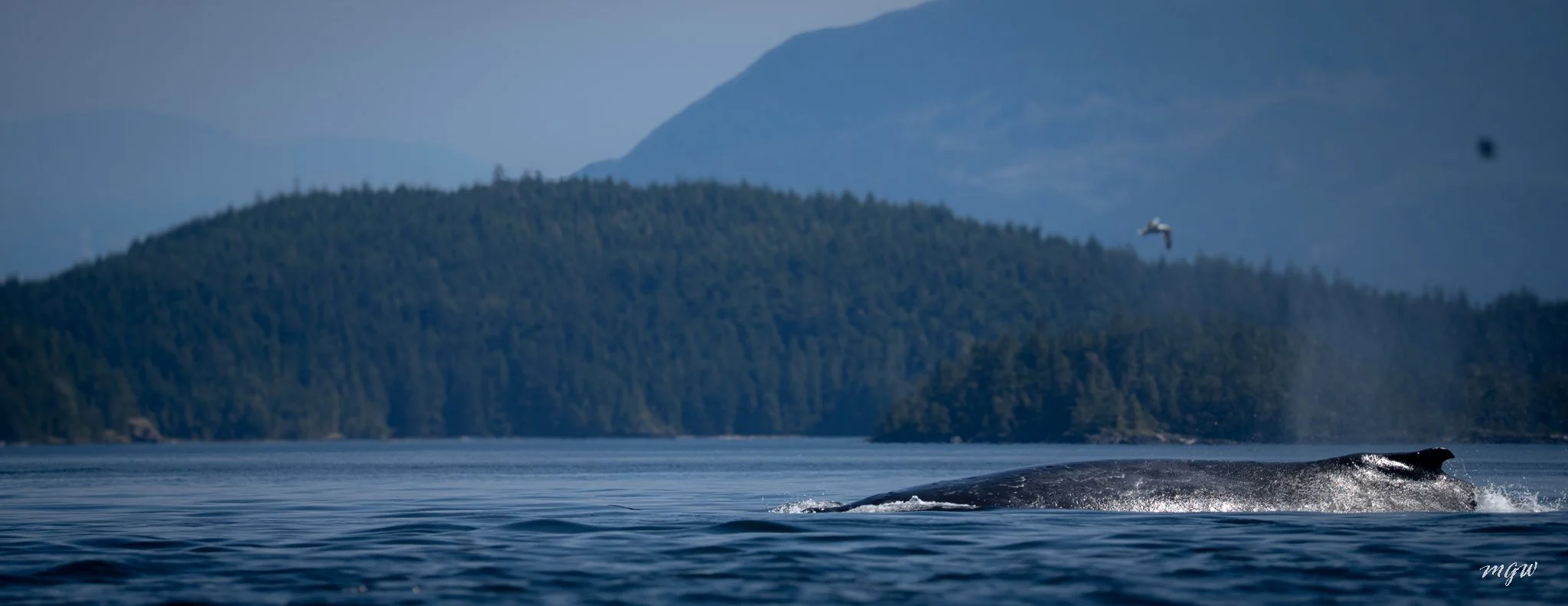
During our most recent paddle out of the Cove we decided to stay at the same site and we had no regrets with our decision. It allowed for calmer days where groups of people could “choose their own adventure” and more time spent together over food and drinks. Whatever you choose to do, while you spend your days exploring the blackfish sound, be mindful of current. There are very strong currents in the area where The Blackfish Sound, Hanson Island and Blackney passage meet. There is also very strong current that flows out of the West Passage. On our most recent trip we were not able to cross the West Passage because of the current, and modified our paddle plans to stay within the Blackney Passage and the Johnstone Strait; enjoying our time with the humpbacks and a short period of time with transient Orcas. Whatever you choose to do, if you find yourself in currents you are uncomfortable paddling in, keep directly parallel to the shoreline. Within four feet of the shoreline there is typically an Eddyline that occurs to make the waters by the shore relatively calm.
Day 4: It’s time so say goodbye (or it isnt’t, stay as long as you’d like)
I would recommend paddling back via the east side of Hanson Island, there is a lot of beautiful landscape and small channels in double bay that make for a very memorable paddle home. After paddling across the east side of Hanson Island, we used the channel between Hanson Island and the Plumper Islands to make our way to the Johnstone Strait crossing. Remember when you are planning your travel home to make sure you are entering into the channel between Hanson and Plumper around slack tide. The channels during this trip experience the roughest current during the rising and lowering of the tides.
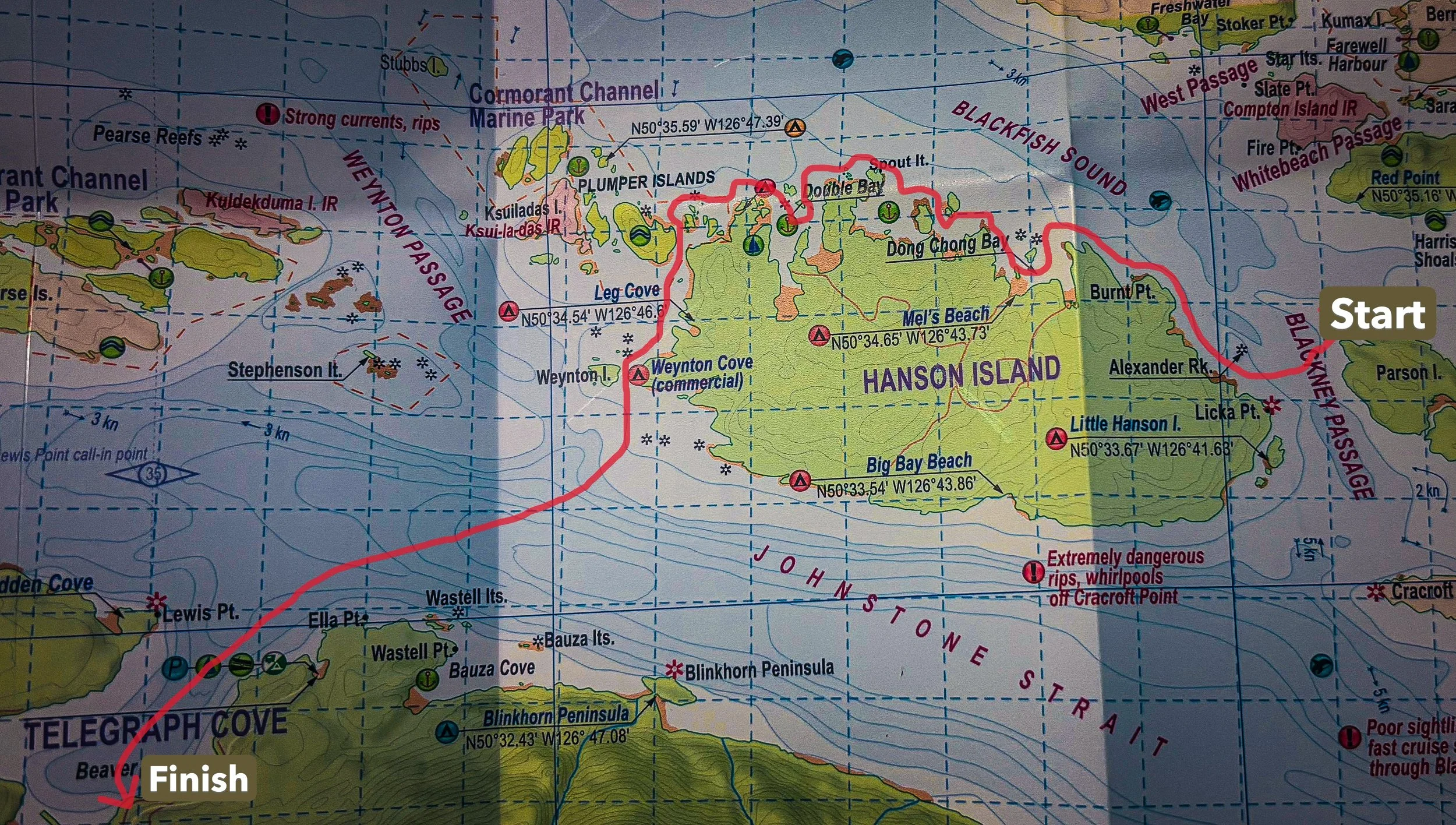
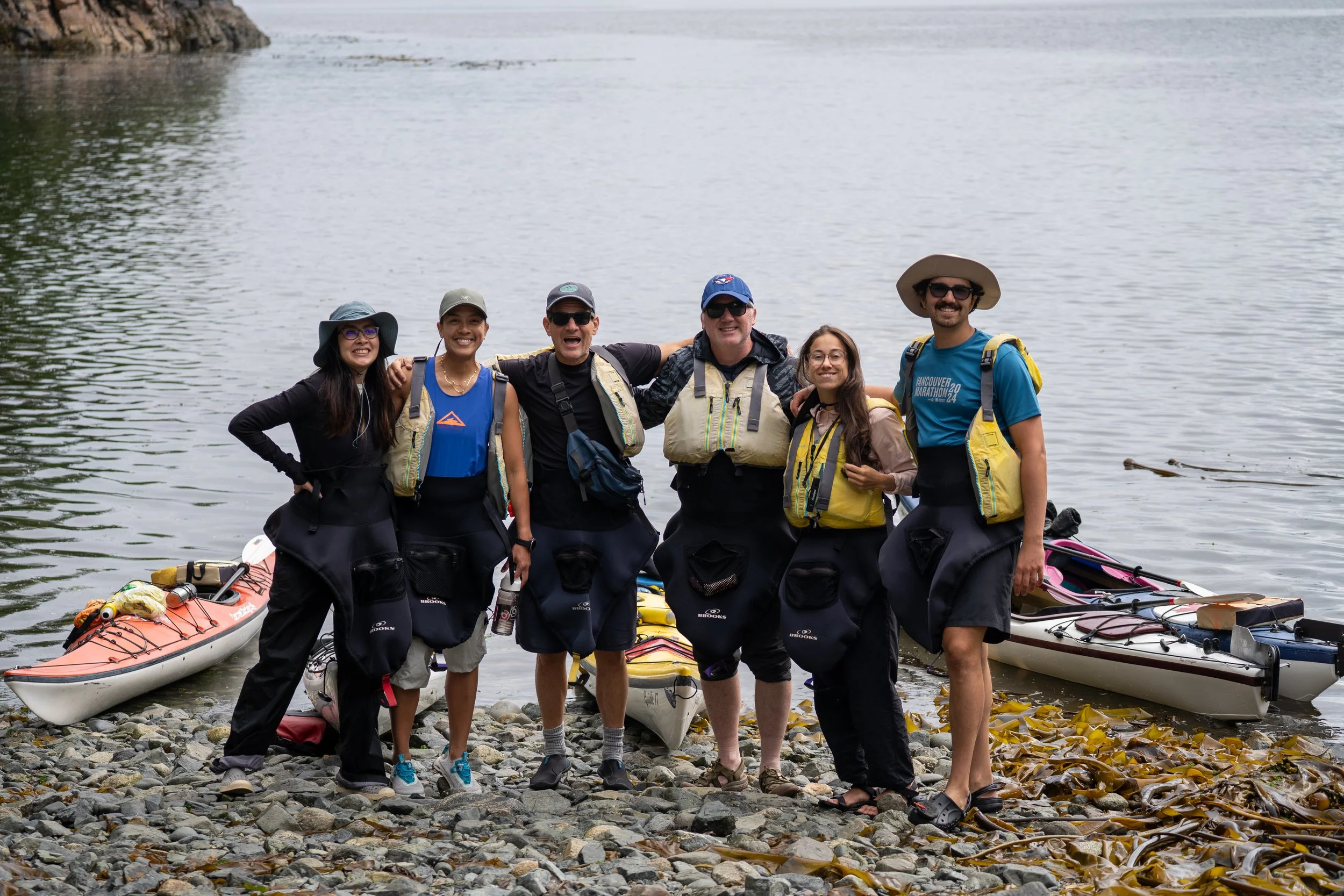
And that is that. You are preparing for an unforgettable experience that honestly will be a far easier of a paddle than whatever your are envisioning as of now. Just remember to respect the currents and make sure you are going with a good group of people! Trips like these are made and broken based on the company you keep, I have been very lucky to have only the best people join me on my excursions out of Telegraph Cove thus far.
If you would still like more information on this trip please do reach out. I can offer a 1-1 one hour virtual meeting to discuss more details of this trip that may not have been covered here, and answer any questions you may have. I can also be your guide for a very reasonable fee if that is something you are looking for! Guided expeditions come with a complimnetary photo package similar to the photos found on this site.
